
What to Look for When Choosing TCM Remedies: Vendor and Product Red Flags
Medical disclaimer: This article is for educational purposes only and isn’t a substitute for professional medical advice, diagnosis, or treatment.
As covered in our guide to sourcing TCM safely, the tradition itself isn’t the risk — unregulated, unverifiable sourcing is. This article is the practical companion: concrete things to check, and concrete things to watch out for, before working with a practitioner or buying a product.
How much regulatory backstop you get depends heavily on where you live and buy from. Singapore has one of the more developed licensing regimes for TCM anywhere in the world, which is why several checks below reference it directly. Other markets — including the United States, where TCM products are typically sold as loosely regulated dietary supplements rather than licensed medicines — have far less screening between a product and the shelf, which if anything makes these checks more important, not less. Where a check is Singapore-specific, we’ve noted the closest equivalent elsewhere.
Check the Practitioner’s Registration
In Singapore, TCM practitioners must be registered with the TCM Practitioners Board and hold a valid practising certificate — this has been a legal requirement since 2004. A legitimate practitioner won’t hesitate to confirm their registration, and it’s a reasonable, normal question to ask before your first visit.
In the US, acupuncturists and TCM practitioners are licensed at the state level (requirements and titles vary by state), and your state’s licensing board lookup serves the same purpose as Singapore’s TCMPB registry. If your country doesn’t formally license TCM practitioners at all, that’s useful information in itself — it means the product-level checks below carry more of the weight.
Check the Product’s Regulatory Status
Chinese Proprietary Medicines (finished-dosage products — tablets, capsules, liquids) sold in Singapore must be listed with the Health Sciences Authority and meet its safety and quality requirements before they can legally be sold, and the manufacturers, importers, and wholesalers involved all need to be licensed. HSA’s Infosearch portal lets anyone look up the official List of Chinese Proprietary Medicines and the List of Notified Health Supplements and Traditional Medicines for free — if a product doesn’t show up there and it should be a listed CPM, that’s a real, checkable red flag, not a vague suspicion.
If You’re Buying in the US (or a Similarly Unregulated Market)
The US FDA regulates TCM herbal products as dietary supplements under DSHEA, not as drugs — which means no pre-market safety review, no requirement to prove the product works, and no prescription needed to buy. That gap is real and well-documented: research on TCM preparations sold internationally has found undeclared pharmaceutical ingredients (including warfarin, dexamethasone, and diclofenac) in a meaningful share of tested samples, and the FDA has separately issued public warnings about specific Chinese-made supplements — including “herbal” sexual-enhancement products and herbal coffees — found to contain undeclared prescription drugs like sildenafil and tadalafil. Independent testing has also found measurable heavy-metal contamination (lead, arsenic, cadmium, mercury) across a meaningful share of TCM products sampled worldwide, not limited to any one country.
Without a Singapore-style pre-market listing to check, the most useful things a US (or similarly situated) buyer can do are: search the FDA’s tainted-supplement and health-fraud warnings database for the specific product or brand before buying, favor products manufactured under current Good Manufacturing Practice (cGMP, required for US dietary supplements since 2007) with a named, traceable manufacturer, and treat any product making drug-like claims (“as effective as steroids,” “clinically proven to cure”) as a red flag — supplements aren’t legally allowed to make those claims, so a product that does is already misrepresenting itself in a checkable way.
Red Flags Worth Taking Seriously — With Real Examples
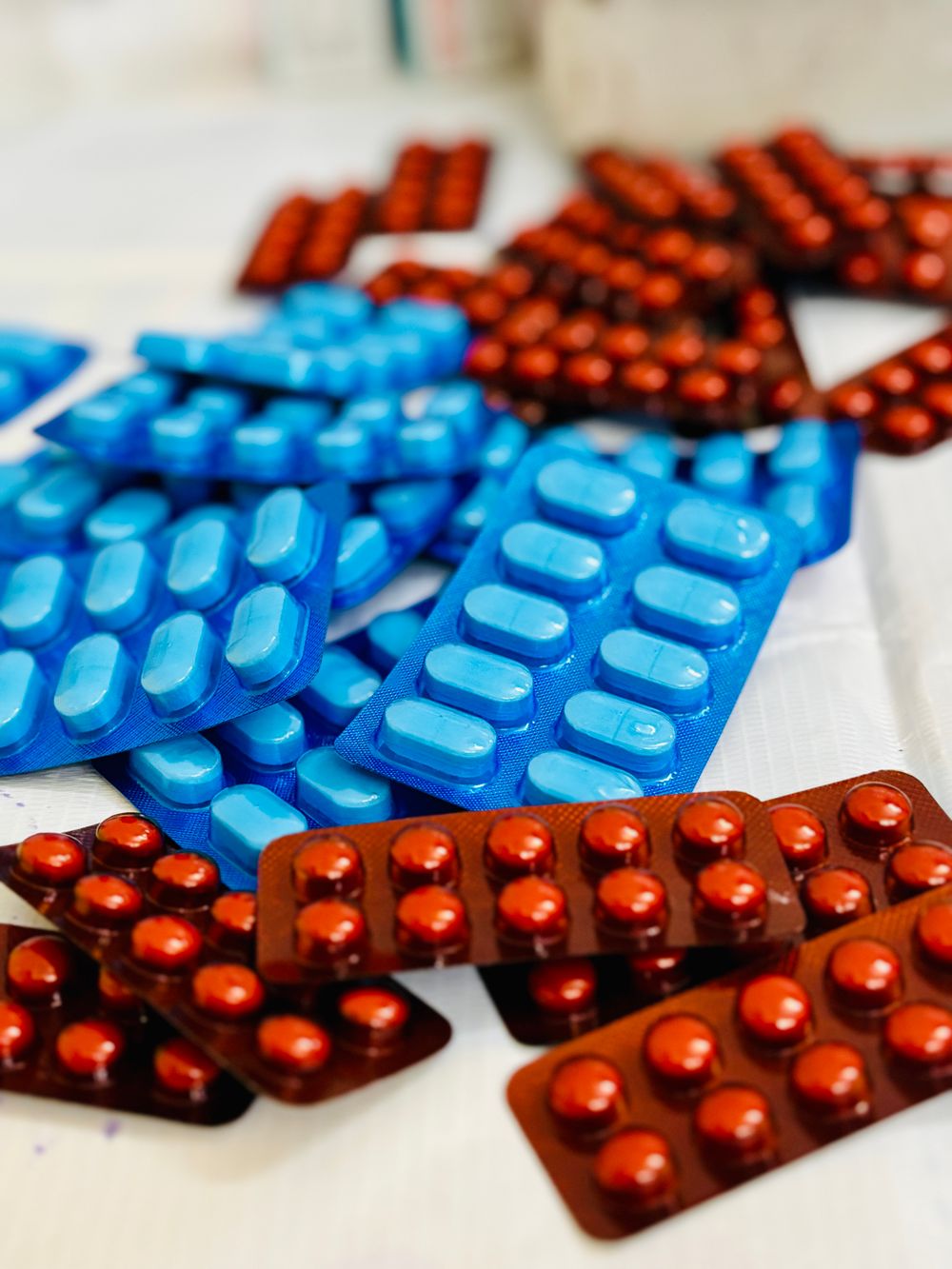
These aren’t hypothetical. HSA has repeatedly found TCM-labeled products sold through informal online channels — Shopee, Lazada, Carousell, Qoo10 — that were adulterated with undeclared pharmaceutical ingredients. In one case, a product called “Du Zhong Jin Gu Wan” was found to contain the steroid dexamethasone along with an antihistamine and an anti-inflammatory drug, none of it disclosed on the label. In another, a product tested positive for six different undisclosed medicinal ingredients at once — a steroid, an antihistamine, an NSAID, a cholesterol drug, and two antibiotics. Separately, several weight-loss products marketed under a TCM label have been found to contain sibutramine, a prescription appetite suppressant banned in Singapore since 2010 over cardiovascular safety concerns. In several of these cases, real consumers reported adverse effects before the products were pulled.
The pattern across all of these is consistent, and it’s what to actually watch for:
- Sold only through informal online marketplaces (social commerce platforms, unfamiliar overseas sellers) rather than a licensed pharmacy, registered TCM clinic, or a listed product you can verify on Infosearch.
- No visible manufacturer, no ingredient list, or no verifiable regulatory listing on the packaging.
- Suspiciously fast or dramatic results — effects more consistent with a hidden pharmaceutical (like a steroid or stimulant) than a traditional herbal formula, especially for pain, weight loss, or skin conditions, which is where HSA has found the most adulteration cases historically.
- A seller or practitioner unwilling to answer sourcing questions, or who gets defensive when asked.
- Pricing dramatically cheaper than comparable regulated products — often a sign the corners being cut are exactly the ones that matter for safety.
- Substitution or mislabeling of specific herb species — the mechanism behind the aristolochic acid cases discussed below, where an unregulated product contained a different, more dangerous plant than what was labeled.
- Claims that a product replaces medical treatment for a diagnosed condition rather than complementing it.
Case Study: Aristolochic Acid
This is one specific, well-documented example of the substitution risk above — not the only risk, but a serious one worth understanding in detail. A small number of herbs — including some historically mislabeled as Mu Tong, Fang Ji, or Xi Xin — come from the Aristolochia plant genus, or have been found substituted with it in unregulated products. Aristolochic acid, the compound involved, is a confirmed nephrotoxin and carcinogen, linked to real cases of kidney failure and urinary tract cancer — most notably a well-documented outbreak among women taking an unregulated Chinese herbal weight-loss product in the 1990s, and elevated rates of certain kidney and urological conditions found in follow-up research on affected practitioners and patients. None of the herbs or formulas covered in our TCM guides (Huang Bai, Ku Shen, Bai Xian Pi, She Chuang Zi, Long Dan Xie Gan Tang) are Aristolochia-derived. Like the undeclared-steroid cases above, this is exactly the kind of substitution that proper regulatory screening, licensed sourcing, and product listing requirements are designed to catch — and that unregulated sellers have no mechanism to catch at all.
A Simple Checklist
Before using a TCM remedy: is the practitioner licensed with your country or state’s relevant board (TCMPB in Singapore, a state board in the US)? Does the product show up on a regulator’s listing where that applies (HSA Infosearch in Singapore; an FDA warning search in the US)? Is the ingredient list and manufacturer disclosed, with a real, traceable company behind it? Is the seller a licensed pharmacy, registered clinic, or established retailer rather than an informal online marketplace? Will the seller or practitioner answer direct sourcing questions without hesitation, and does the product avoid drug-like claims it isn’t allowed to make? If the answer to any of these is no, that’s reason enough to look elsewhere — regardless of how the product is marketed, how dramatic the claimed results are, or which country you’re buying in.
Bottom Line
Vetting a TCM source takes the same handful of checks as vetting any health product, wherever you live: credentials, regulatory listing where one exists, transparency, and a healthy skepticism of dramatic claims or bargain pricing. Markets vary a lot in how much of that checking is done for you before a product reaches the shelf — Singapore does more of it than most, the US does comparatively little — which just shifts more of the responsibility onto the checks you do yourself. The undeclared-steroid and aristolochic-acid cases above aren’t reasons to avoid TCM — they’re reasons to buy it the same careful way you’d buy any health product, from a source that can actually be checked.
This article is for educational purposes only and isn’t a substitute for professional medical advice, diagnosis, or treatment.
Sources consulted: Singapore Health Sciences Authority public alerts on adulterated and counterfeit TCM/health products (including documented undeclared steroid, antihistamine, NSAID, antibiotic, and sibutramine cases), HSA Infosearch and Chinese Proprietary Medicines regulatory guidance, TCM Practitioners Board registration requirements, peer-reviewed reviews of aristolochic acid nephropathy and associated cancer risk, US FDA warning letters and health fraud alerts on adulterated Chinese-made supplements (including undeclared sildenafil/tadalafil in sexual-enhancement products and herbal coffees), NCCIH’s overview of TCM contamination findings, DSHEA/FDA dietary supplement regulatory framework, and published research on heavy-metal and pharmaceutical adulteration rates in TCM preparations sampled internationally.